

Check In, Watch Out

It’s busy today. 20 minutes late. 30. The minutes tick by. Bodies shuffle in and out, the door constantly creaking and groaning as it opens repeatedly.
As she walks into the room, heads lift in anticipation.
“Miss Davidson…” I see half the heads in the room glance around the room as she calls out the name, looking for Miss Davidson, the other half go back to looking at the tiny screens in their hands.
I know there are only a few seconds left before she says it again. I take one more look around the room, pleading with some higher power that no one is paying attention, grab my backpack and my blanket and walk toward her. Signaling discreetly.
It’s me. The one who looks more like mister than anything. The one fighting to live in the skin that feels more like mine than ever before. I’m Miss Davidson. Again.
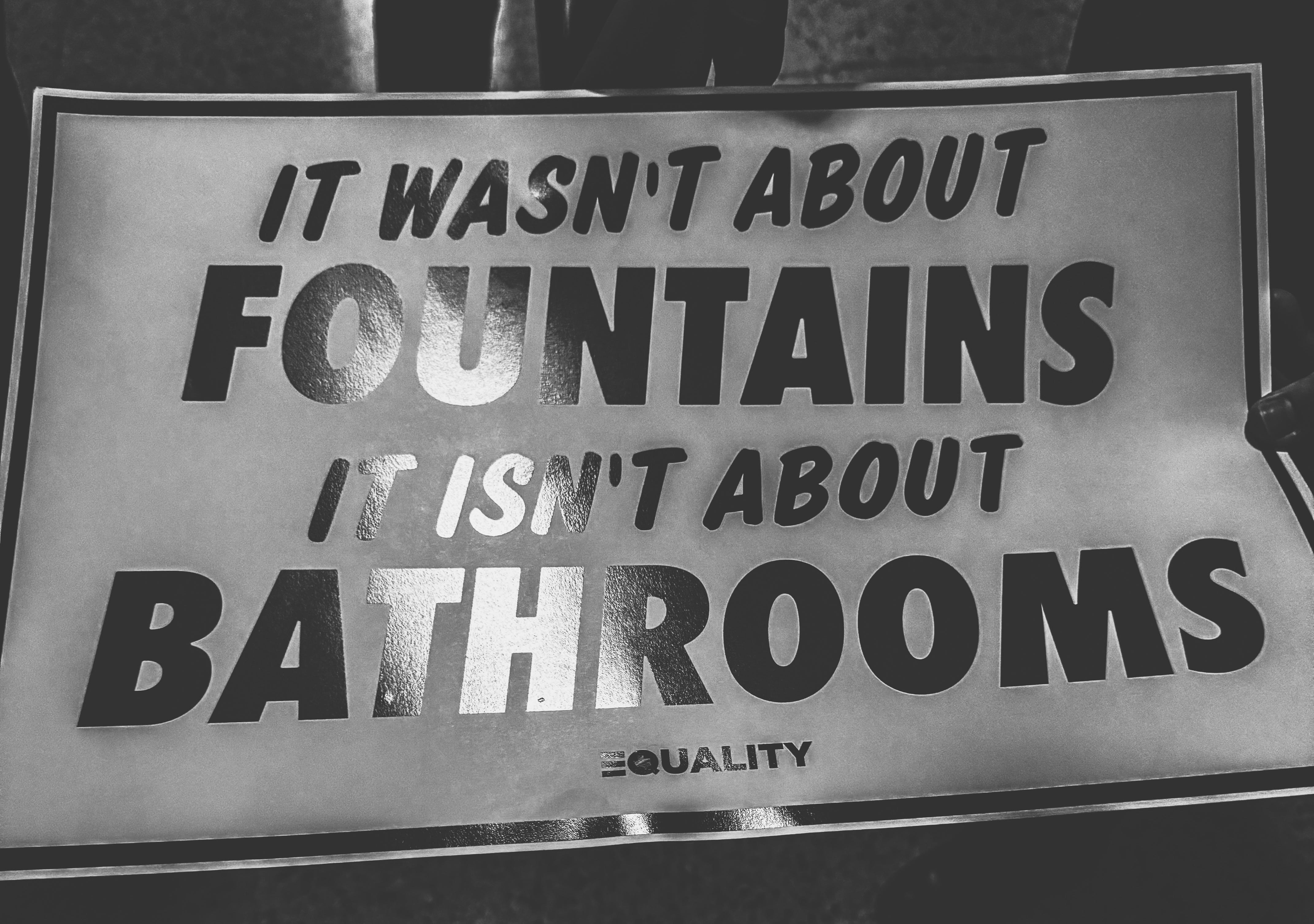
Here in Texas, they have decided to use a special legislative session that was supposed to help recent flood victims to shoehorn a “bathroom” bill through the state legislature.
On July 4th and 5th, 2025, Texas saw one of the worst floods in the history of US. The death toll swelled to over 135 people, including at least 30 children. Yet, the Texas legislature turned their focus toward telling folks which bathrooms they could use in state-run and funded buildings and organizations.
As a transmaculine, nonbinary person, living in central Texas, this bill affects me directly. Even worse, as a transgender breast cancer survivor, this bill has far reaching consequences.
The cancer center that I go to, undoubtedly receives state and government funding. I’m no longer receiving chemo or radiation therapy but my life will always be an unending stream of doctor’s visits, scans, and tests.
Hopefully, I’ll never have to endure chemo or radiation again. But, the odds… aren’t exactly in my favor. I take medication every day to fend off recurrence. This medication is a constant reminder that cancer could be just around the corner.
Cancer appointments can be long. Hours long. My most recent visit, which occurred two days ago, was long. It even included a bathroom break before getting a PET scan. It’s actually part of the procedure.
Step 1: Get injected with radioactive glucose.
Step 2: Wait 45 minutes
Step 3: Empty your bladder
Step 4: Get scanned
But if you’re trans in Texas, and in a state funded cancer center, how does Step 3 work exactly? Does the center lose their funding for letting us use the bathroom in order to get lifesaving care? Does the tech get arrested for allowing me to use the bathroom? Do they lose their job? What about my oncologist who ordered the scan in the first place? Or do I simply not qualify for a test that can identify cancer cells throughout my body, simply for being trans? Is my life worth less?
I have to imagine that this is what it feels like for others too. What is it like to pass through protestors picketing Planned Parenthood? Doctors and health care workers have been risking their safety and their livelihoods at Planned Parenthood for years. Patients who are simply seeking affordable medical care are forced to consider whether it’s safe to do so. Should accessing health care require patients and practitioners to sacrifice their safety? Are their lives worth less?
According to a recent poll, 1 in 3 women and nearly half of all black women have received care at Planned Parenthood. Each one of those women had to make choices between getting their healthcare needs met and their own physical and psychological safety.
I didn’t choose cancer. It chose me. But if I want to live a long, fulfilling life, I will return to the same cancer center every few months for the foreseeable future. I often say that having cancer is like making a series of shitty choices from a series of shitty options.
One of those shitty choices was choosing between receiving life saving chemotherapy and getting publicly misgendered in front of a jam packed waiting room in central Texas, or dying from an entirely treatable cancer prognosis in order to keep my trans identity a secret.
Regardless of who you are, shouldn’t we all have the right to seek out and receive healthcare without having to fear for our safety?
No one should have to worry about getting their ass kicked in the parking lot of a cancer center, simply for existing. But that fear followed me after every single chemo appointment. I walked hurriedly to my car. Exhausted from hours of being hooked up to machines, with poison coursing through my body, I couldn’t just seek respite and relief. I scanned my surroundings, weaponizing the keys in my palm until the relief of the drive home enveloped me.
With bathroom bills on the horizon in Texas and across the US, if there’s a next time for me, can you tell me which bathroom I should vomit in after chemo? Which bathroom I’m allowed to empty my bladder in before the next PET scan? Or whether I’m simply worthy of receiving cancer treatment at all?
I’m a transgender breast cancer survivor. I use he/they pronouns. And you can call me Ash.
A quick note… when I wrote this, SB-8, the trans bathroom ban had not yet passed Texas state legislature. As of now, it has. It will become law in Texas.
During the legislative process, I signed up to give public testimony on much of what I wrote above. They allowed 2 hours for that testimony and so many people showed up to speak, that the majority of us were never able to say our piece.
Nevertheless, I submitted my testimony online. If you’d like to read that, verbatim, please see below:
My name is Ash and I use he/they pronouns. I’m a transgender, breast cancer survivor and advocate. I’m here to oppose SB8. In 2022, I had gender-affirming top surgery. During that surgery, my surgeon found a tumor. It was cancer.
I didn’t know I had cancer. No one did. If I hadn’t had access to that surgery - if my insurance hadn’t covered it…who knows when that tumor would have been discovered. That surgery at that time saved me from a far worse prognosis and fate with cancer. So yes, gender-affirming care saved my life.
But what does that have to do with bathrooms?
Let me explain. I had a PET scan a few weeks ago, because when you’ve had cancer, you don’t just "move on." You live with scans, tests, and constant monitoring - often in hospitals, clinics, or public health facilities. Many of those are state-funded.
Here’s how a PET scan works:
Step 1: get injected with radioactive glucose.
Step 2: wait 45 minutes.
Step 3: empty your bladder.
Step 4: get scanned.
But if SB-8 passes, and I’m in a state-funded facility… how do I do Step 3?
Does the tech get punished for letting me pee? Does my oncologist get fined?
Or do I just not qualify for a potentially life-saving scan, simply because I’m trans?
And what if I get cancer again? Chemo infusions take hours. What happens when I need to use the bathroom? Or vomit? Should I carry my birth certificate (which also reflects my gender as male) to prove I’m puking in the correct restroom? Or even worse, if I am forced to use the women’s restroom, should I, looking, like this, scare all the women in that bathroom who are also undergoing chemo, when they see a man in the women’s restroom?
Or maybe I just shouldn’t show up for treatment at all. Because clearly, the audacity of having cancer while trans means I’m not worth the care, right?
These so-called bathroom bills are written with no understanding of their true reach and impact. They ignore logistics, humanity, and reality. They hurt trans people and they put healthcare providers in impossible positions. We continue to see how these bans affect cisgender people too. When people have to show their breasts to strangers in the bathroom at Buffalo Wild Wings to prove they belong there, we have lost our humanity as a society.
If the goal is truly about protecting women and children, then maybe the focus should shift to predators in office, or the lack of care, support, and resources for families after people are forced to give birth under abortion bans. But me, vomiting in my lap during a chemo infusion, because I can’t legally access a toilet isn’t protecting anyone.
This bill won’t keep anyone safe. But it will absolutely put lives at risk. Including mine.